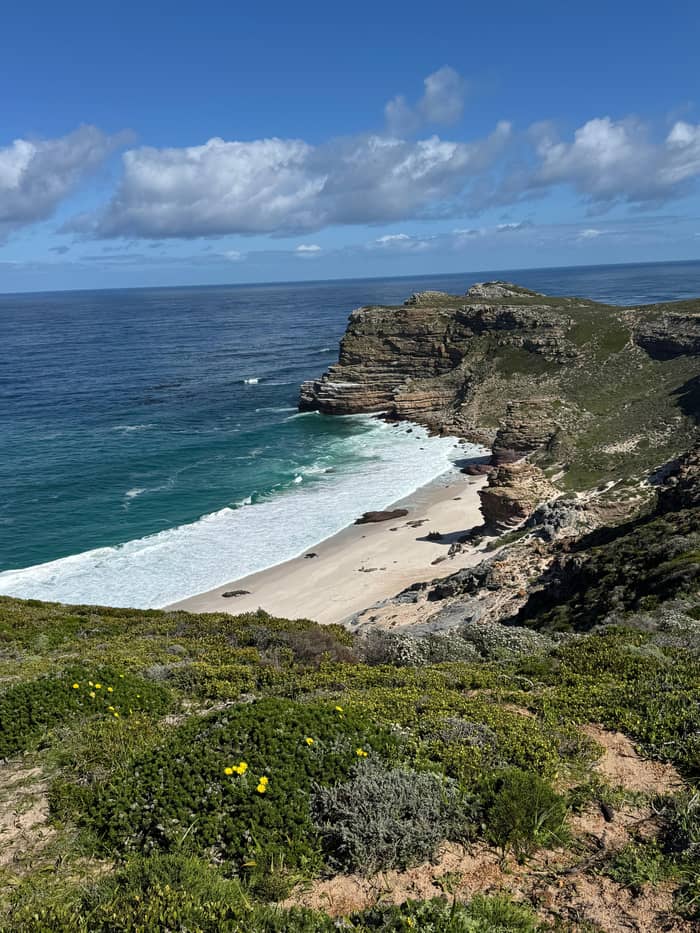
Baboons visit
Dias Beach
Steps down to the sand
See the day tourGuides
Language
Currency
See open slotsfrom $44 · no cancel feeInteractive to-do list
Preparation · 12 items
Tap items to tick them off. This device remembers your progress.
0 / 12 ready
Ready to go. Only the booking is left: your day at the end of the peninsula.
Claim a spotBaboons, eland, zebra and ostriches share the Cape Point reserve with its visitors. This page sets out the rules, the places animals appear and the plan for a calm day.
Editorial team, capepointtour.top · Updated November 7, 2026 · Allow 7 min
Overview
Cape Town Tourism's wildlife guide gives short instructions for baboons, and they are easy to remember. Keep open food out of sight near any baboons, and never try to feed or approach any of them.1,2 Treat that as the whole rule for the day, from the first car park to the last picnic table.
If a baboon comes close anyway, the instruction is to step back slowly, or stay put and let the animals go by.7 Running, shouting and waving a bag are the opposite of that. A calm body and an empty pair of hands give the troop nothing to react to. Keep children close and let them see that you are not afraid, but do not stare, and give the animal a clear route to wherever it is going.
Cape Town Tourism also notes that feeding animals, especially baboons, can lead to aggressive behaviour, and it asks visitors to pack snacks away tightly and avoid close encounters.8 That is worth taking literally at a picnic table or on a beach, where a sandwich in an open hand is an invitation. Zip the bag, keep drinks closed, and eat in a place where you can see around you.
Animal by animal
| Animal | Where it turns up | What to do |
|---|---|---|
| Baboons | Roadsides, car parks and Dias Beach12,10 | Keep food out of sight and do not approach2 |
| Ostriches | Shoreline and picnic areas16 | Keep your distance of 5m4 |
| Eland and zebra | Open ground inside the fence17 | Watch quietly from the car or path17 |
| Whales | Offshore, June to November18,19 | Watch from high ground20 |
| Penguins | Boulders Beach, a separate stop21 | Keep 5m back and never touch22,23 |
The distance of 5m is Cape Town Tourism's figure for wild animals in general, and the penguin rule is the same distance for nesting or congregating birds.4,22
The reserve road is a likely place for a first meeting with a baboon, and the city's guidance for that moment is specific: slow down, close the windows, lock the doors and stay in the vehicle.3 Do not open a door to take a closer photograph, and do not offer anything through a gap in the window.
The reason is on record as well. Baboons now link cars with food and may try to get inside.9 A loaf of bread on the back seat or a bag left open on the passenger seat is visible through glass, so stow food in the boot before you reach the reserve rather than at the moment a baboon appears at the window.
Cape Town Tourism adds that a baboon may be seen lounging by the road during walks, drives or picnics.12 Allow extra time on the reserve road for that, and drive at the pace the road asks for. When you park, check what is visible inside the car, close every window fully and carry your lunch with you only to a table you have looked over first. A few quiet habits remove most of the trouble.
Baboons are just a part of the reserve. Cape Town Tourism lists tortoises among the residents, along with baboons, eland, zebra, ostriches and bontebok.5 The reserve's own operator points visitors to the Cape mountain zebra and to the eland, the world's largest antelope.28 Chapman's Peak Drive's guide to the area adds red hartebeest to that list and describes the reserve as the only fenced park in the range.17
Ostriches are a good example of how relaxed the wildlife can look. Cape Town Tourism says you may spot an ostrich taking a seaside stroll.12 At Bordjiesrif and Buffels Bay it mentions the odd ostrich ambling past the tidal pools and picnic areas.16 The Cape Point ostrich farm is a private business near the reserve road, separate from the park; the birds in this section roam free inside the fence.
Treat every animal the same way, whatever its size. The legal minimum distance from wild animals is 5m.4 Keep your voice low, hold the camera at arm's length and let the animal choose where to go. An antelope that has not been startled stays in the open and gives you a long look, while a crowded animal will vanish into the fynbos and leave you with a photograph of a bush.
Match your visit
Find the situation that sounds like yours and the answer sits beside it
If A baboon is sitting at the car window
Stay in, windows up
The advice is to slow down, close the windows, lock the doors and stay in the vehicle.3
If A baboon comes toward me on foot
Move away slowly
Step back slowly, or stay put and let the troop go by.7
If I want to picnic on the beach
Choose a designated area
Fires are limited to designated braai areas, among them Buffels Bay and Bordjiesrif.11
If I want to swim at Dias Beach
Pick a tidal pool instead
Swimming at Dias Beach is discouraged because the currents can be quite dangerous.25
If I am walking a dog
Keep it on a leash
Dogs must be kept on a leash and away from coastal areas that baboons use.27
Stops in the reserve and how to arrive
Baboons visit
Steps down to the sand
See the day tour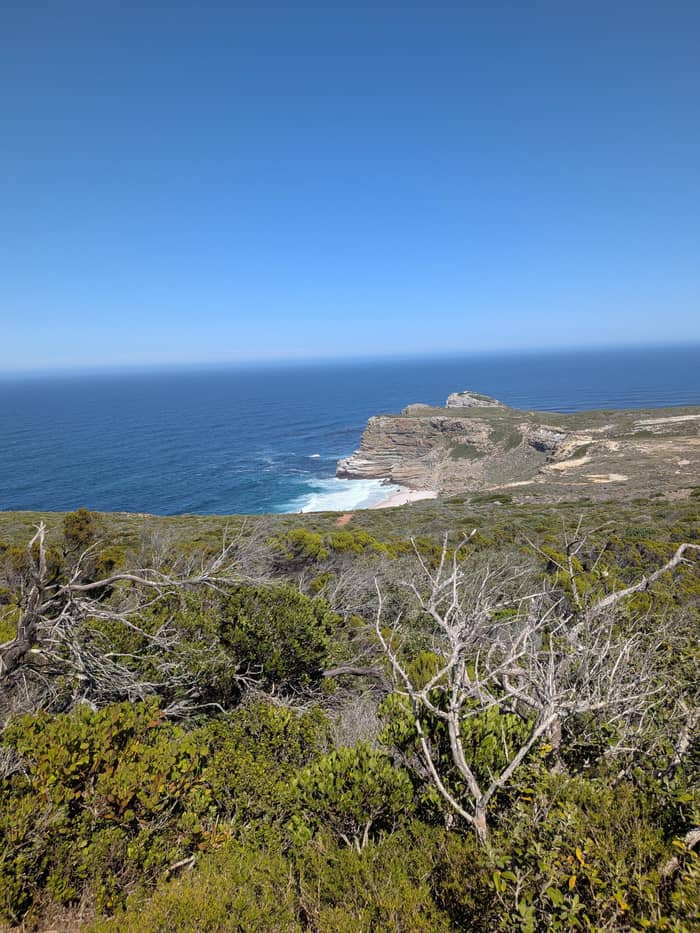
Family spot
False Bay side
See the day tour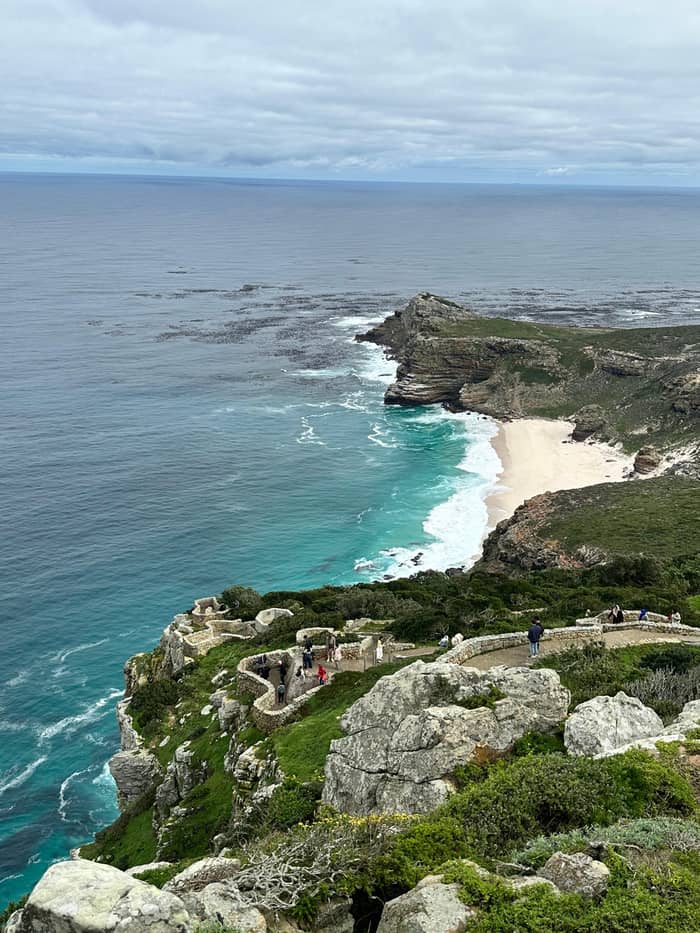
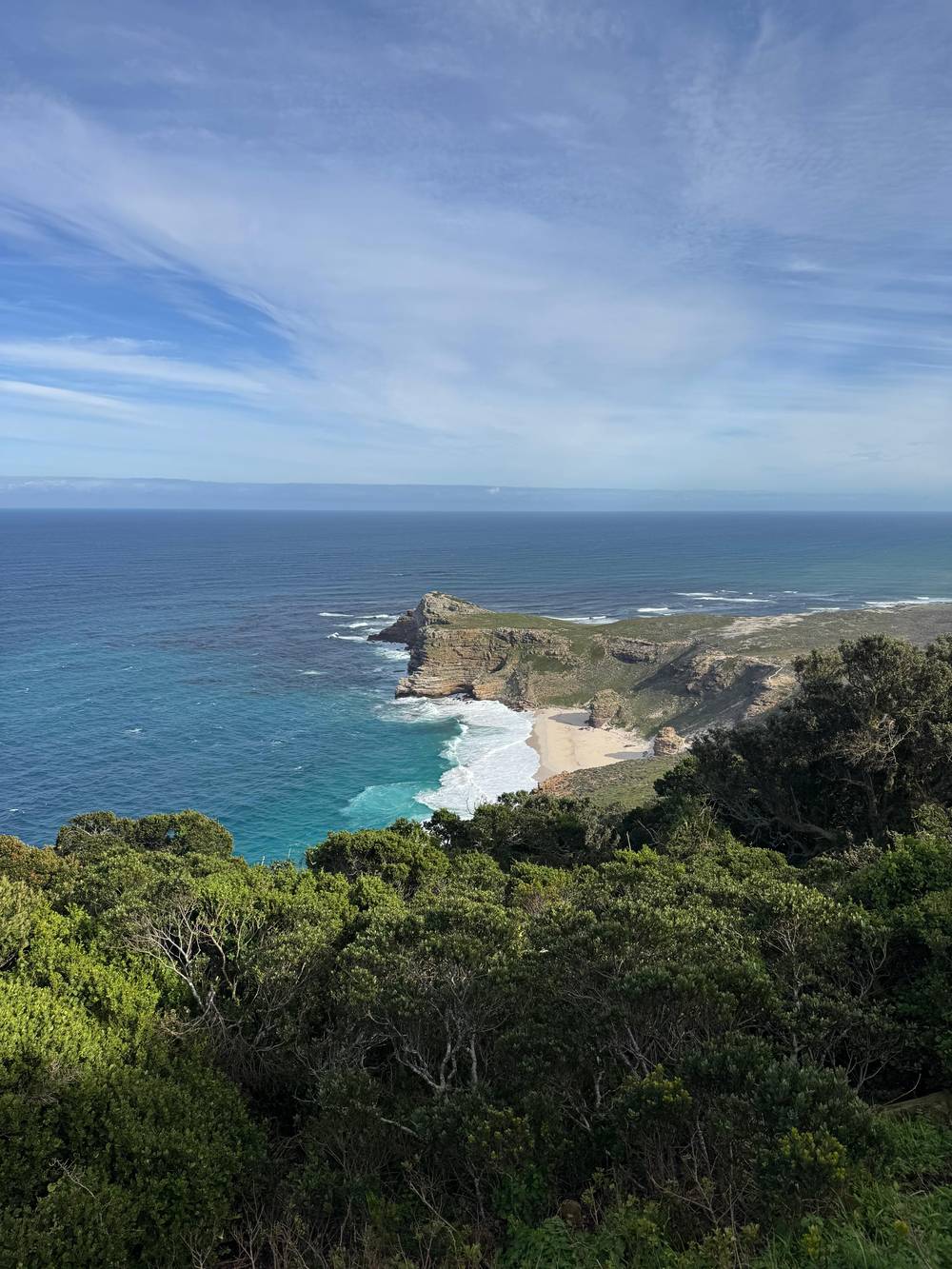
Wreck views
Atlantic side
Dias Beach lies down a steep wooden staircase.24 Cape Town Tourism notes that swimming there is discouraged because the currents can be quite dangerous, and that baboons are known to visit, so belongings should be watched.25,10 Take only what you need down the steps, and keep bags zipped and in sight if you sit on the sand.
The gentler beaches are on the False Bay side. Bordjiesrif and Buffels Bay are described as having tidal pools, swimming spots, picnic sites and walks.26 Fires are limited to designated braai areas, among them those bays.11 Pick a spot with a clear view and keep cooked food covered until you are ready to eat it.
For a longer day, the Buffelsfontein Visitor Centre is described as a place to learn which plants and animals to look out for in a given season.32 The cold Atlantic washes the west coast of the reserve and the warmer waters of False Bay the east.33 A short stop at the centre before a walk is a sensible way to find out which animals are about that week.
Price the day
Type your party size and compare four ways to reach the reserve
Choose from 4 options
Type your party size and compare four ways to reach the reserve
≈
View≈
View≈
View≈
ViewStarting prices on GetYourGuide, exchanged at the ECB reference rate. The booking page gives the exact price.
A calm day in the reserve
Before you drive in
Baboons have learnt to associate cars with food, so stow it in the boot.9
On the reserve road
If a baboon approaches the car, slow down, close the windows, lock the doors and stay in.3
At the car park
Keep open food out of sight near any baboons, and carry only what you need.1
Down to the beach
Watch your belongings at Dias Beach, where baboons are known to visit.10
At the tidal pools
Fires are limited to designated braai areas, among them Buffels Bay and Bordjiesrif.11
If a troop passes
Step back slowly, or stay put and let the troop go by.7
The reserve sits in the Cape Floral Kingdom, which Cape Town Tourism calls the smallest yet most diverse plant kingdom on Earth.34 Cape Town Tourism counts more than 1,100 indigenous plant species, among them proteas, ericas and other fynbos.13 Most of it grows low and tight against the wind, so you walk past it at ankle height and the shapes repay a slow look.
Birds are a second reason to carry binoculars. The reserve's operator says about 250 bird species occur at Cape Point, some of them endemic to the area.14 Sea birds and shore birds are part of that count, so carry binoculars. Use them to get closer, and leave the animals where they are.
Fynbos is fragile, and Cape Town Tourism asks walkers to wear decent shoes, follow trail signs and tread lightly.30 Visitors are also asked not to collect shells or stones.35 The rule is simple to follow: take photographs, take your litter, and leave every plant, shell and pebble where you found it, so that the next walker finds the same shoreline.
Video
Our World on YouTube · Your tap on play is what loads the video.
Baboons have learnt to associate cars with food and may attempt to gain access to the vehicle.
The wildlife list is not limited to land. The operator of the Cape Point facilities dates the whale migration past the point at roughly June to October.18 Cape Town Tourism's whale guide gives southern right whales a season from June to November.19 The sources give slightly different end dates, so plan on the longer range if you are flexible.
For viewing, Cape Point and Boyes Drive are listed as high vantage points on False Bay.20 Humpback whales are most likely to be seen between May and November.36 Bring binoculars, stand on the high ground, and scan the water for a spout or a dark back before you look for anything bigger.
The city's guidance asks for 300m from any whale or dolphin.37 From the cliffs that distance takes care of itself, and what matters on foot is patience and a windbreak. The coast here is exposed, so a jacket helps while you wait, and Cape Town Tourism advises carrying comfortable walking shoes, sun protection, water and a jacket on any visit.29
The wildlife rules are not only courtesy. Cape Town Tourism's guide states that failing to act responsibly could result in an arrest, a spot fine or both.6 That applies to feeding, to approaching and to ignoring the distances above, and it applies on the beach and on the road alike.
The city also says it will act against any tour operator, guide or establishment that encourages clients to break the wildlife rules.38 On a guided day, follow the guide when you are told to stay back from a baboon or a penguin.
Dogs are covered separately. They must be kept on a leash and away from coastal areas that baboons use.27 Reception can also be patchy in the reserve, so do not count on looking up the rules on a phone at the moment you need them.31 Read the short list above before you drive in, and the day will be calm.
FAQ
Cape Town Tourism says a minimum distance of 5m from wild animals is always required by law.4
The list includes baboons, eland, Cape Mountain zebra, ostriches, bontebok and tortoises.5
Failing to act responsibly around coastal wildlife could mean an arrest, a spot fine or both.6
Sources
Next read
Planning a day at Cape Point? A real person answers here.