Easy ride
The funicular
Return ticket
Book the dayGuides
Language
Currency
See open slotsfrom $44 · no cancel feeGroup price check
Choose from 3 options
Pick a party size and see what each departure starts at, before the funicular and the gate.
≈
View≈
View≈
ViewStarting prices on GetYourGuide, exchanged at the ECB reference rate. The booking page gives the exact price.
The old tower sat too high in the mist, so a newer one was built lower down. Here is how the funicular, the walk up and the cliff path fit together on a visit.
Editorial team, capepointtour.top · Updated November 7, 2026 · Allow 8 min
Overview
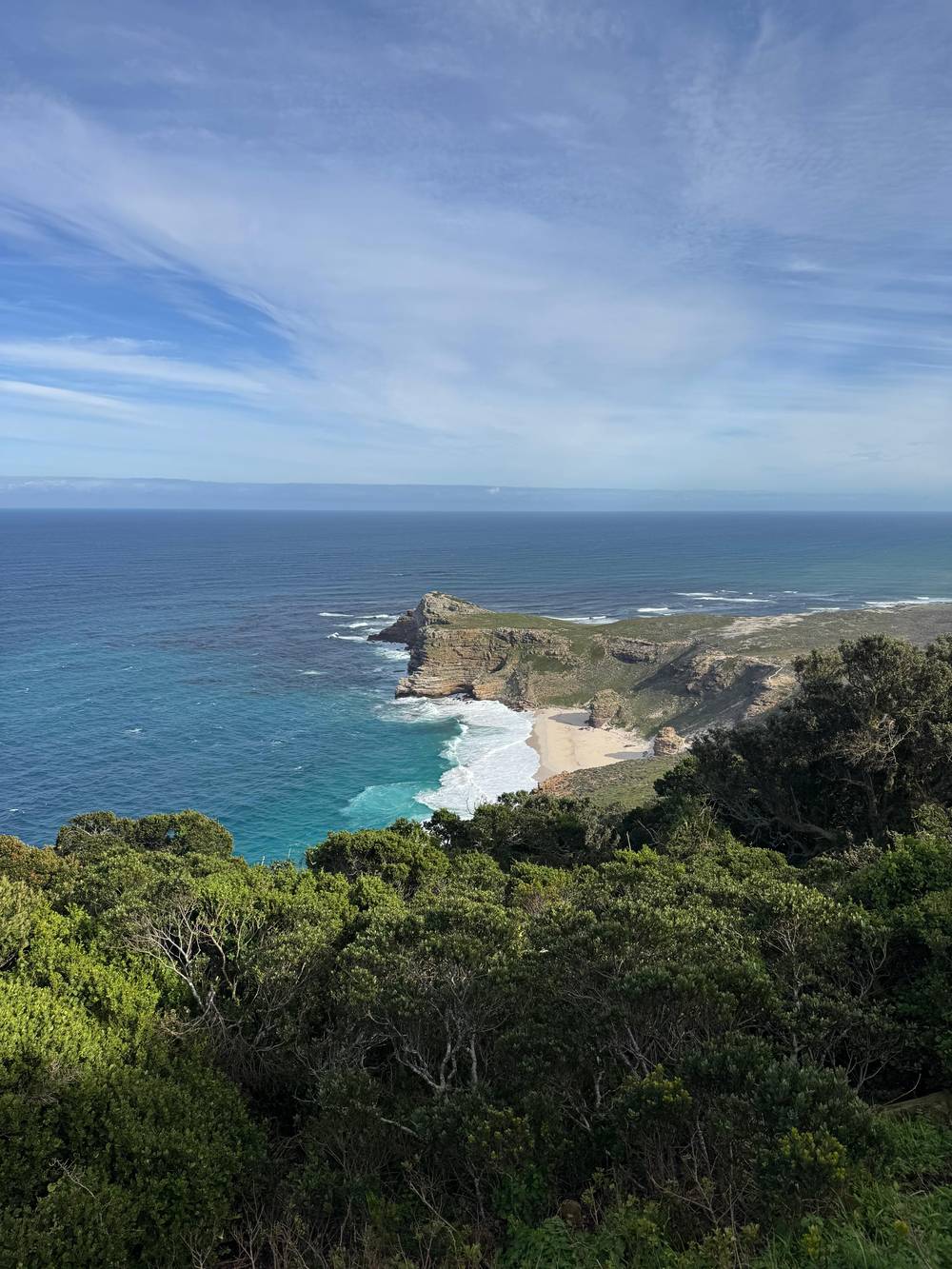
The Cape Point lighthouse is really a pair of buildings on the same headland. The reserve operator says Cape Point has an old lighthouse from 1859 and a newer one lower down by the water, built after ships kept failing to see the original on the heights.6 It is easy to blur them into a single landmark, but a visitor on the funicular is looking at the old one from the upper station. The new one sits lower down the cliff and takes a little more effort to reach.
The old lighthouse is the famous one in photographs. It stands on Da Gama Peak, the high point of Cape Point, at 238 m above sea level, a height that made it very ineffective in mist.1 That is a surprising fact on a headland known for storms, but it makes sense once you picture the cloud that settles on the peak. A light that sits inside the cloud cannot be seen from the sea, which is exactly where it needs to be seen.
The newer lighthouse was built in 1914 and has the strongest light on the South African coast, flashing in groups of 3 every 30 seconds.2 The operator's page on the reserve's history adds that the second lighthouse was placed at 87 m, far below the original summit.1 If you came for a lighthouse in the sense of a working beacon, the lower building is the one to look for, and the Lighthouse Keeper's Trail leads to it.
Side by side
| Detail | Old lighthouse | New lighthouse |
|---|---|---|
| Built | 18591 | 19142 |
| Height | 238 m above sea level1 | 87 m1 |
| In mist | Very ineffective1 | Built to fix that1 |
| Today | A monitoring point12 | The most powerful light on the coast2 |
| How you reach it | Funicular or walk9 | The Keeper's Trail10 |
Both towers are described on the operator's visitor pages, and the heights are above sea level.1
The problem was weather, and it is an old one. The operator's history says the original lighthouse was built in 1859 at 238 m, which made it very ineffective in mist, and that mandated a second lighthouse at 87 m.1 The old tower, however, did not disappear when the second light arrived. It still stands, and it now serves as the hub for monitoring every lighthouse in South Africa.12 That gives the building a second life that the tourist photographs never mention.
The same weather can catch visitors. The operator's own winter guide describes the lighthouse and nearby rocks frequently vanishing behind the mist at Cape Point.13 That is easy to forget on a clear day, and it is the reason to treat the upper station view as a bonus rather than a promise. A grey morning can lift by midday, and a bright start can close in, so build in time rather than a fixed schedule if your day allows it.
The sailors who feared the point called it the Cape of Storms, and the reserve counts 26 recorded shipwrecks around it.14 That history is the backdrop to every lighthouse photograph. If you stand at the upper station on a day when the cloud comes in, you will understand the first builders' mistake without needing the sign, and you will see why the second tower went lower on the slope, where the sea can still be seen.
Time at the lighthouse
The ride is the operator's figure, the walk-up comes from our tour record, and the 45 minutes is the tour's lighthouse stop.3
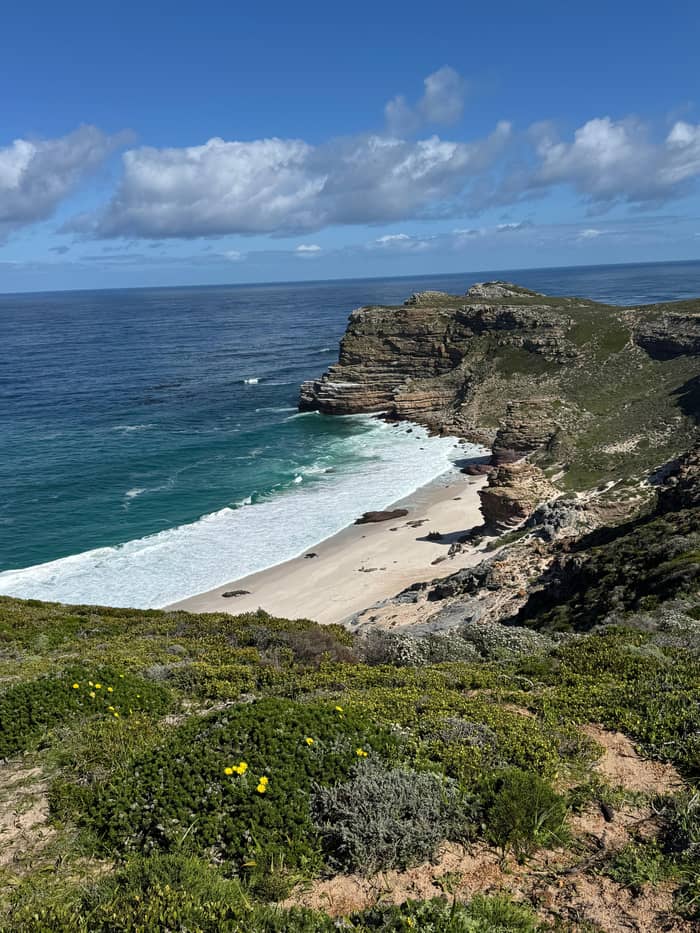
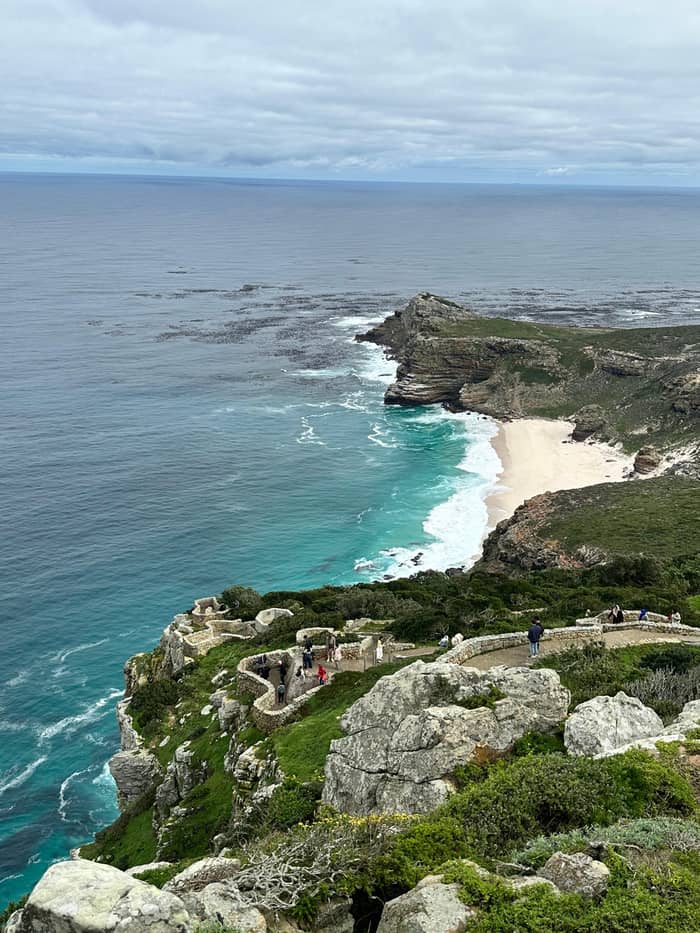
The old lighthouse stands at the top of the funicular line, and what most people come for is the view rather than anything inside. The operator describes the funicular as sparing visitors the uphill walk from the car park to the old lighthouse and its panoramic views.9 In other words, the reward is the platform outside the building and the cliff walk around it, with the coast falling away below you and the long line of the peninsula running north on one side.
Treat it as a viewpoint with a story. The headland is part of the southern section of Table Mountain National Park, and the reserve it lies in is part of the Cape Floral Region World Heritage Site.16 Look inland and you see the fynbos covering the slope, and look seaward and you see the line where the cliffs meet the water. A pair of binoculars is useful, and so is a windproof jacket, since the platform is exposed.
If you are on our day tour, the new Cape Point lighthouse stop is 45 minutes in the record's itinerary. That is enough for the ride or the climb, a loop of the viewpoints and a photograph, but not for a long walk or a long queue. Ask your guide how that time is meant to divide between the funicular line and the platform, and decide before you leave the bus which part matters most to you.
Pick your way up
Say what matters most and see which way up fits.
If I have little energy to spare
Ride the funicular
It spares you the climb from the car park.9
If I want to avoid a ticket
Walk up
Our record describes a 15-minute walk as the alternative.
If I travel with a wheelchair
Ride the funicular
The operator calls the ride wheelchair accessible.3
If I want to reach the new lighthouse
Take the Keeper's Trail
The path starts behind the upper station.10
If I have only 45 minutes
Ride, then stay on the platform
That is the length of our tour's lighthouse stop.
Ways up
Easy ride
Return ticket
Book the day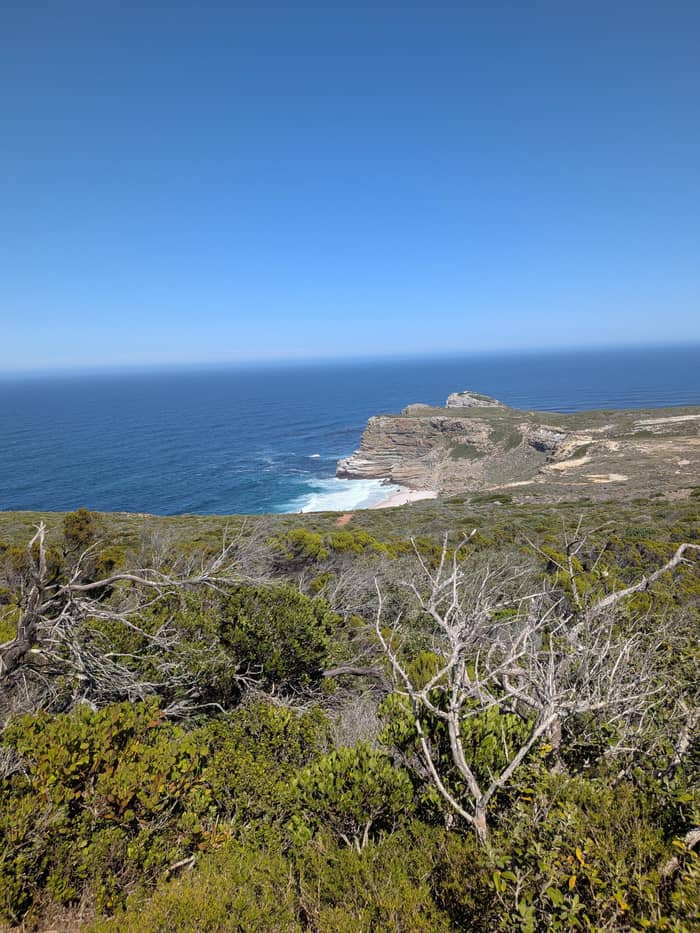
Free option
Our tour record
Longer walk
Behind the upper station
Book the dayThe funicular at Cape Point is a short, steady ride. The track starts at a lower station by the Cape Point car park and climbs through thick fynbos to the upper lighthouse.8 The lower station stands 127 m above sea level, and the ride up takes 3 minutes in a wheelchair-accessible car.7,3 It leaves the lower station every 3 minutes and can carry 450 people to the upper lighthouse in an hour.4,19 Everything about it is designed to be simple, with no timetable to learn and no reservation to make before you arrive at the station.
Those figures are the operator's, and they are the best guide to how fast the queue should move. A funicular that departs every 3 minutes and moves 450 people an hour does not leave a crowd standing for long.4,19 Even so, a coach party arriving together can make the lower station busy for a while, so check the queue before you commit. The operator calls it Africa's only commercial funicular of its kind, named after the legend of the Flying Dutchman ghost ship.15
The legend is part of the visit. As the operator tells it, a Dutch captain named Hendrik van der Decken was sailing the Flying Dutchman home from Batavia to Holland in 1641.20 The ghost ship is said to haunt these waters, and the funicular is the reserve's playful nod to it. You will not see a ship from the car, but you will have a good story for the ride, and the audio tour the operator offers makes the most of it.21
The visit in order
Car park
The lower station is 127 m above sea level.7
Ticket
A return ticket is R125, or take the 15-minute walk up.5
On the ride
The line rises through dense fynbos to the upper lighthouse.3,8
Upper station
The funicular spares you the walk up to the old lighthouse.9
Behind the station
You have a real choice here, and it is a sensible one to make in advance. A return ticket costs R125 for an adult and R65 for a child or a pensioner, in rand as the operator publishes it.5 Our listing's record describes the alternative on the same day: buy a funicular ticket or walk up in 15 minutes past a viewpoint. The walk is the free option, which suits a good day, a steady pair of legs and a wish to stretch after the drive.
The ride suits other days, and it needs no planning ahead. If you have small children, a heavy bag, a bad hip or a wheelchair, it is the sensible spend, since the car is accessible.3 It also saves time on a tour with a tight schedule, because the walk up and the walk back both eat into a fixed stop. In a strong wind or on a wet day, a sheltered ride is easier than a slippery path, and the operator publishes a planned-closure notice with a shuttle when maintenance is needed.22,23
One more consideration is the return. The funicular is a return ticket, so the choice is not a one-way gamble, so you can use it for the way up and decide about the way down later. The operator's page lists a one-way option on some pages, but the figures differ between its own pages, so we stick to the return fare here.5 Decide at the lower station when you see the queue and the sky, not at the breakfast table, and keep a little spare time in the stop for either choice.
Video
Professional Weekenders on YouTube · Your tap on play is what loads the video.
It’s the only commercial funicular of its type in Africa, and takes its name from the local legend of the Flying Dutchman ghost ship.
Before you go up
If you want more than the platform, walk the Lighthouse Keeper's Trail. The operator says it begins just behind the upper funicular station and leads along a narrow but well-established path to the lesser-known new lighthouse.10 It runs about 2 km, 1 hour return, and the operator rates it easy.11 That is a short walk with a large payoff, since it puts you on the cliff face beneath the old lighthouse.
The trail also answers the question of which lighthouse is which. Walking it, you see the old tower high above you and the new one ahead, and the contrast explains the whole story of the mist and the second building. The operator's guide says the path goes past bunkers and fynbos until it runs out at what feels like the very tip of Africa.10 Remember that the tip is a feeling here and not a geographical fact, as our page on the names explains.
On a tour day, you probably will not have time for the whole trail. If the 45-minute stop is all you get, the honest choice is the platform and a few steps along the path. If you are driving yourself, plan an hour on top of the funicular time, bring water and wind protection, and keep an eye on the closing hours, because the gate and the funicular both keep fixed times, and the walk back to the car park is part of the plan.17,18
FAQ
At 238 m the original was very ineffective in mist, so a second lighthouse was built at 87 m.1
The operator says it has the strongest beam of any lighthouse on the South African coast.2
The child and pensioner return fare is R65.5
Our tour record describes a 15-minute walk up as the alternative to buying a funicular ticket.
The operator describes the 3-minute funicular ride as wheelchair accessible.3
The operator gives the Lighthouse Keeper's Trail as 1 hour return and rates it as an easy walk.11
Sources
Planning a day at Cape Point? A real person answers here.